
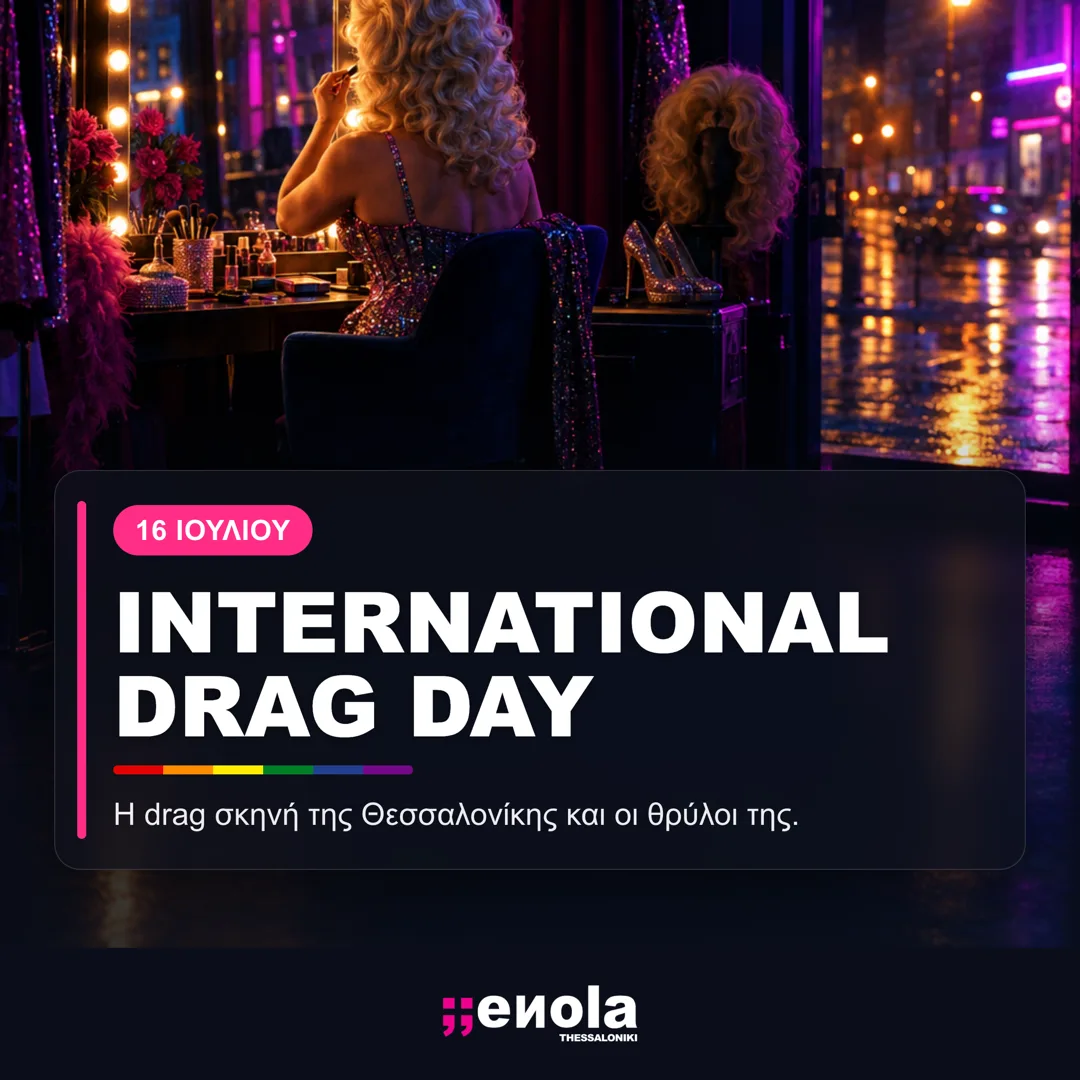
July 16: International Drag Day — Thessaloniki’s drag scene
- On July 16, International Drag Day is celebrated.
- drag is art, performance, and part of queer history.
- Enola hosts drag nights; the schedule is announced on its channels.
- At the drag show: bring your energy, respect the performers’ space, and ask before filming video.
Thessaloniki’s drag scene has its own voice, and July 16, International Drag Day, is the perfect occasion to celebrate it. Drag is art, performance, political statement, and party all at once: wigs, makeup, lip sync, humor, and a lot of courage. In this guide, you’ll find out what drag is, how to enjoy a drag show as if you’d always been in the front row, and where you can find it in the city.
Drag Day is one of the brightest days in the LGBTQ+ calendar with all visibility and remembrance days. It comes a few days after Non-Binary Day on July 14, and it’s no coincidence that the two days go together: both play with the boundaries of gender and make them a little looser for all of us.
What we celebrate on International Drag Day
International Drag Day is a day to honor drag artists and the whole culture around them. It’s not just about the sparkle of the stage. It’s also the hours in front of the mirror, the costumes sewn by hand, the rehearsals, and the risk of stepping out in front of an audience as the self you choose to show.
Drag has always been part of queer history. In times when visibility came at a high cost, drag performers were often the first to stand up front, on stage and in the street. That’s why drag is not just entertainment: it’s also part of the struggle for freedom of expression.
Drag in Thessaloniki: a scene with character
Thessaloniki’s drag scene lives mainly in the city’s queer spaces, where the night leaves room for experimentation. In Greece, figures like Diona Dallas opened paths for both art and activism. If you want to learn more, read our feature on Diona Dallas, the iconic drag queen and activist.
Today the drag scene is more diverse than ever. You’ll see:
- Drag queens, with big wigs, bold makeup, and theatrical flair.
- Drag kings, who play with masculinity, often with a lot of humor.
- Non-binary and experimental drag, which doesn’t fit into any box and doesn’t want to.
- Performers of every gender and identity, because drag doesn’t have a “right” body.
Television made drag known to many more people, and we wrote about how Drag Race changed the visibility of the LGBTQ+ community. But drag lives first and foremost live, on small stages, in front of an audience that cheers, laughs, and gets emotional.
Drag nights at Enola
Enola, at 19 Valaoritou, on the 2nd floor, on the edge of Ladadika, hosts drag, art, and music nights and supports queer artists. Since 2008, it has been a space where expression doesn’t need permission. The dates and performers of drag nights are announced on Enola’s channels, so check the schedule there before you go out.
Enola is open every day from 23:30, you don’t need a reservation for a regular visit, and there is no dress code. But if you want to come with a big group for a drag show or celebrate something, contact the Enola team in advance. If it’s your first time, take a look at what to expect on your first night at Enola.
How to enjoy a drag show as if you’d always been there
A drag show is a performance, but also a meeting with the audience. A few simple rules make the night better for everyone:
- Bring energy. Clap, cheer, sing along. Performers feed off the crowd.
- Respect their body and their space. Don’t touch a wig, costume, or performer unless they ask you to.
- Use the persona’s name and the pronouns the performer gives you.
- Ask before filming or before posting anything with people from the audience.
- Humor goes both ways. If you get “picked” from the audience, play along. If you don’t want to, a smile and a “no, thank you” are enough.
And remember: at Enola, a safer space policy applies, with zero tolerance for harassment, racism, transphobia, or misgendering. If something doesn’t feel right, talk to the Enola team.
How to support the drag community all year long
Drag Day lasts one day, but performers work all year round. If you love Thessaloniki’s drag scene, you can:
- Go to drag shows in your city and bring friends along.
- Follow the performers you like and share their work, mentioning their name.
- Speak up when you hear someone mocking or attacking drag.
- Remember that behind the persona there is a person with work, expenses, and a life.
Every year, Thessaloniki Pride reminds us that visibility in the street and joy on stage go hand in hand. The same goes for drag: it’s a celebration, but also a way to say, “I’m here.”
Mini glossary for the next drag show
If you’re new to drag, a few words will help you get into the mood:
- Lip sync: the performer “sings” along to a song with their mouth, with their whole body.
- Reveal: the moment when a costume changes before your eyes.
- Death drop: the dramatic fall to the floor that makes the whole club scream.
- Mother: praise for someone who gave it their all, or for the “drag mother” who taught you the craft.
Want more words from queer culture? Read about Polari, the secret slang of the British queer community. And when you’re ready to experience Thessaloniki’s drag scene up close, our guide to Enola has all the practical details.
Try the quiz: Flags and symbols: how many do you recognize? — how many symbols of queer culture do you recognize at first glance?